The Home Depot · UX Manager, Design Ops · Stencil
Stencil: a system the business could feel
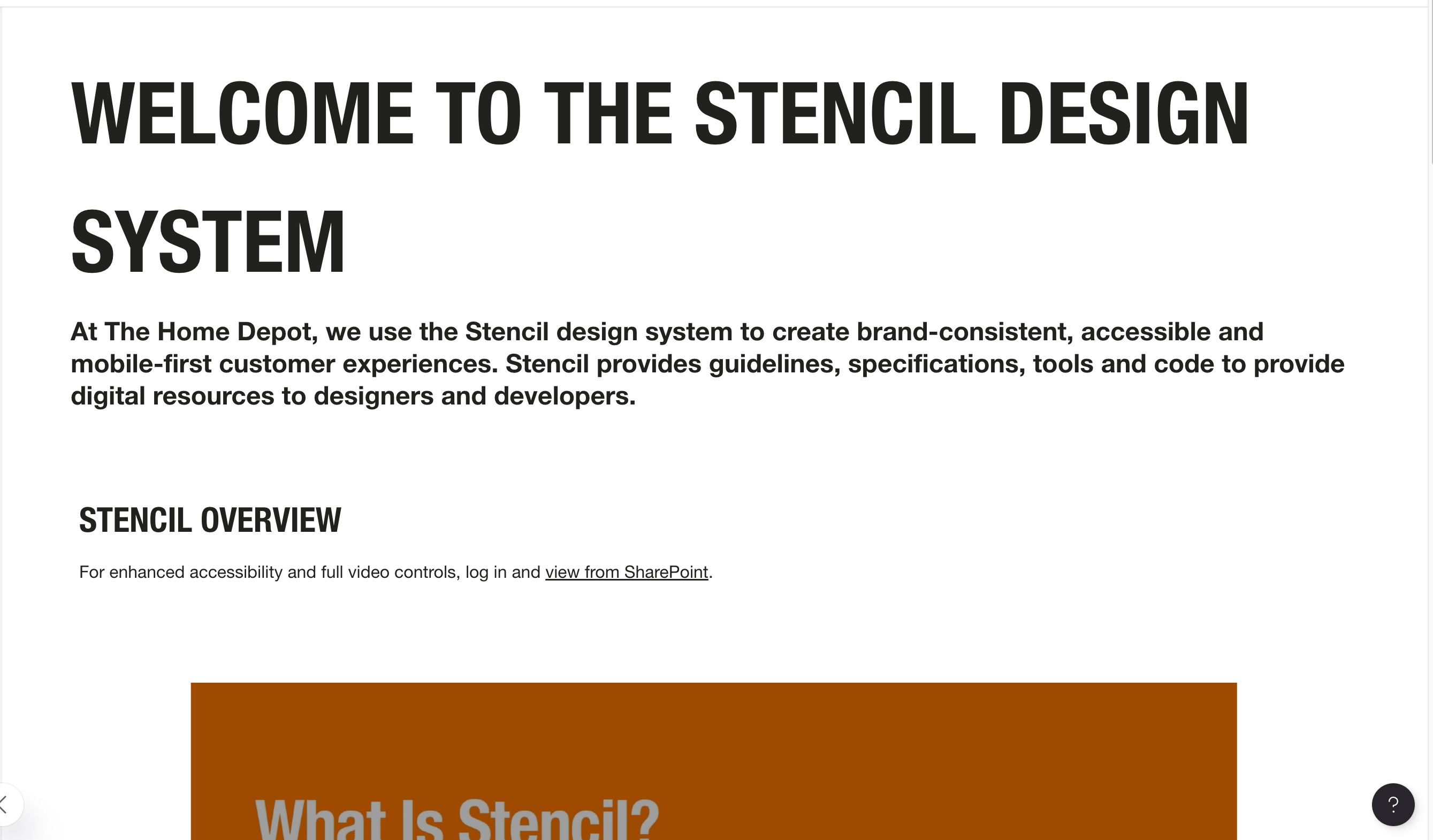
Home Depot needed a responsive, scalable design system for every customer-facing online experience. When I entered Design Ops, the organization did not have a system, a component library, or a single home for brand standards.

The problem
Customer-facing properties were outrunning shared UI. Inconsistency slowed design and engineering and made every new surface a renegotiation. A system that lived only in Figma — or only in code — would fail. It had to be governed, staffed, and useful to Creative, Marketing, Engineering, and Product at the same time.
Role
UX Manager supporting the creation, implementation, and adoption of Stencil; design-system management and strategy; a multidisciplinary UX team; and people-ops systems for the online UX org. Close partnership with the Stencil product manager and with UX leadership that had never had a Design Ops function before.
Strategy
- Stand up libraries, standards, critique, and a team that could own the system as a product.
- Tie system investment to speed and sales, not aesthetics alone.
- Treat adoption as design work: case studies, research, governance, and tooling decisions, including Figma.
The system
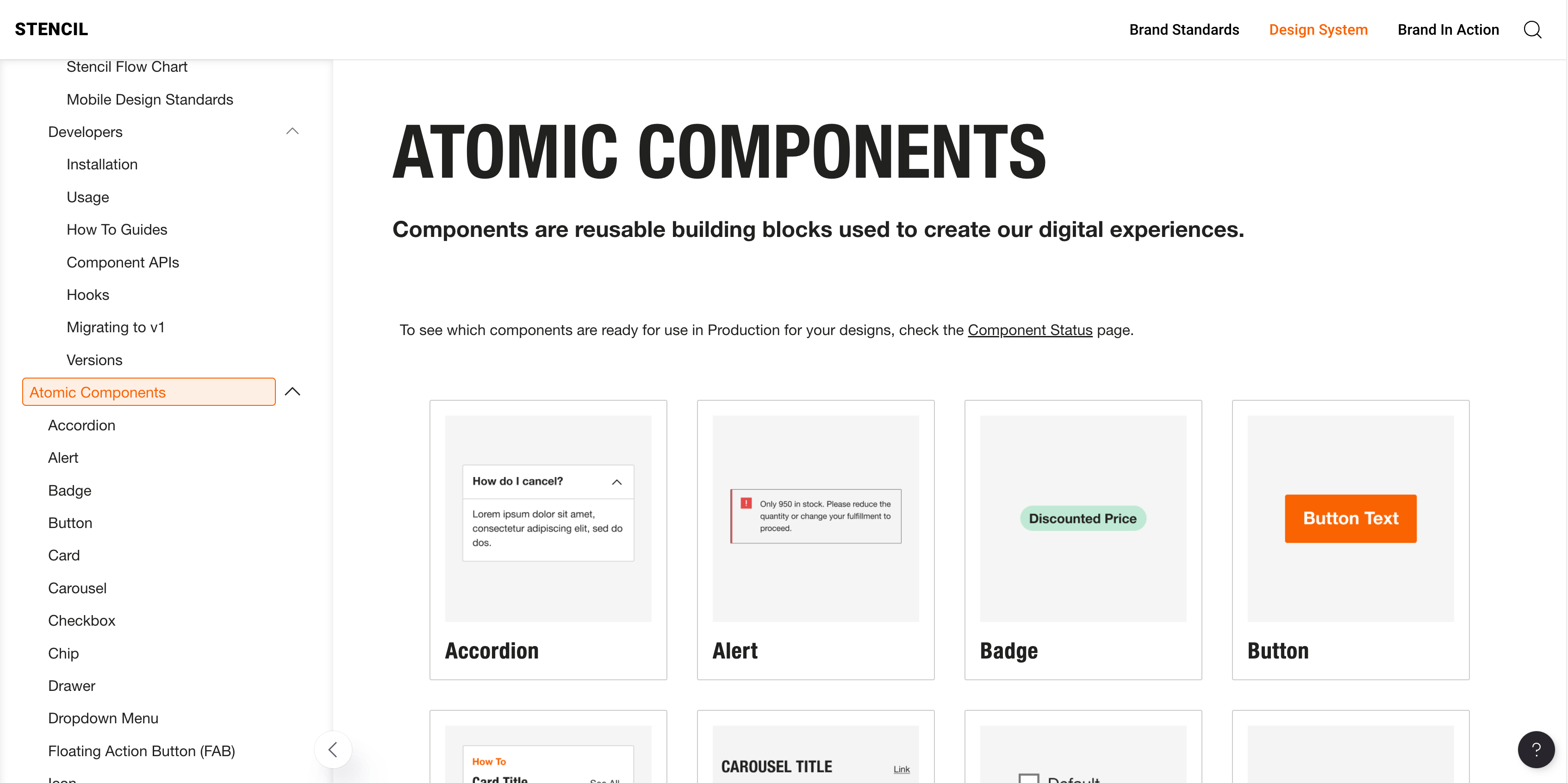
Design tokens and a Figma library for UX, mapped 1:1 to coded atomic components for engineering. Guidelines lived with the code so teams were not guessing how or when to use a component.
Outcome
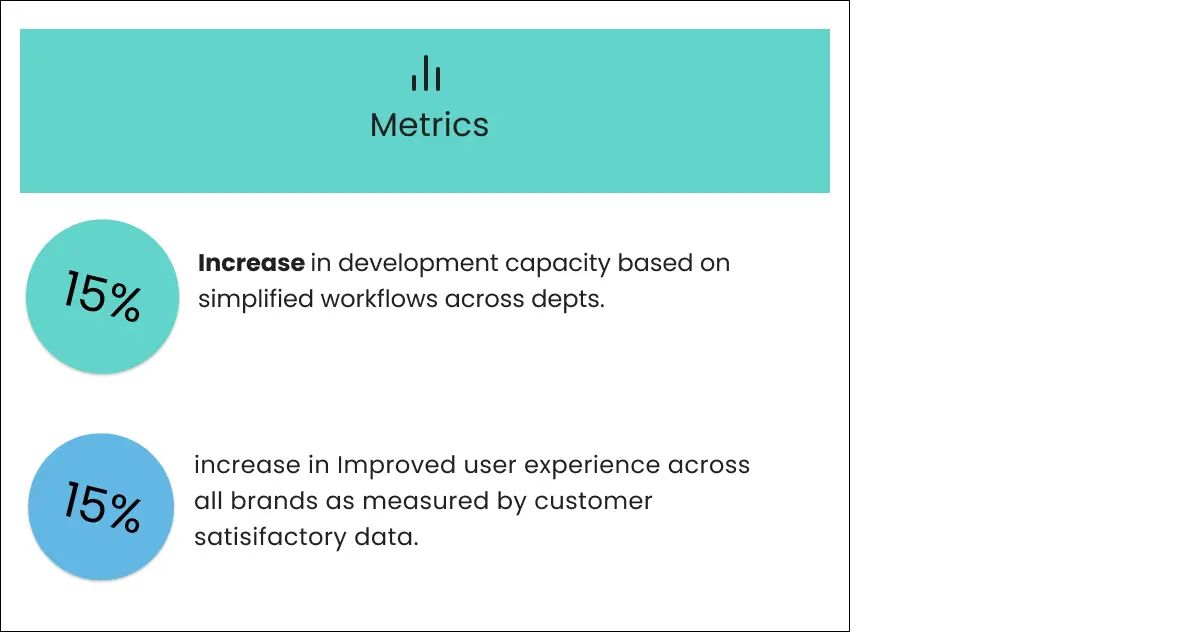
Stencil shipped as the system for customer-facing online properties. The work correlated with a 35% increase in customer sales tickets and a 15% increase in speed to market for design and development.